

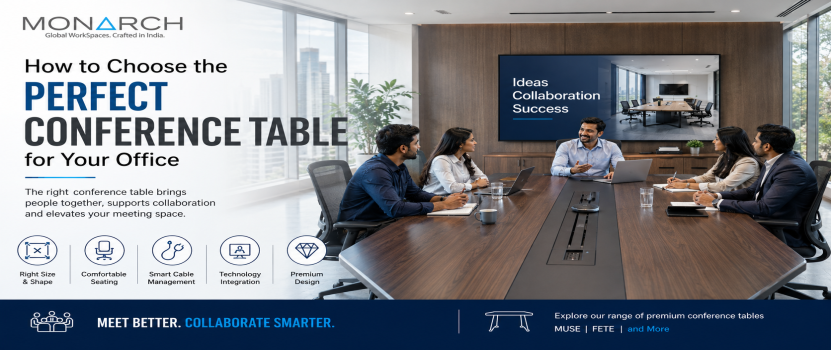
How to Choose the Perfect Conference Table for Your Office
How to Choose the Perfect Conference Table for Your Office
A conference room is not just a location for meetings; in fact, it serves as the venue for the exchange of ideas, decision-making processes, client meetings, and strategic planning. Hence, a suitable conference table plays a major role in the similarity with regard to the work carried out in this space. In order to make the right choice regarding this table, one should be able to have a clear understanding of such parameters as the size of their office, the meetings that are planned, the number of people that will be invited to a meeting, and the financial limitations concerning the conference table representation.
Consider the Size of Your Conference Room
First, it is essential to measure the available space before purchasing a conference table because it should be able to fit in the space without overcrowding it. There must be sufficient space for easy movement of the chairs, as well as walking around and accessing doors and other things.
For the smaller meeting rooms, one can use smaller tables like rectangular, round, or boat-shaped ones. However for bigger meeting rooms, use a wide Conference Table suitable for a big number of people.
Determine the Required Seating Capacity
When selecting a conference table, the number of people that attend the meetings regularly is one of the crucial factors. An undersized table can result in uncomfortable meetings, while an oversized table will take away space in the office. It is necessary to think about the size of a regular meeting and not choose based on occasional needs. Some teams may require a table for four to six people, while company meetings or client presentations may require a table that can accommodate eight, ten, or more people.
Choose the Right Table Shape
Conference tables can be found in a variety of shapes; each shape contributes to a different atmosphere for meetings.
The rectangular shape is a common choice that suits formal conference rooms. The boat shape adds more room and provides good visibility among the participants. Round and oval tables give a possibility of having a more collaborative meeting as all the participants see each other.
Choose a shape that matches the room and the way your group runs meetings.
Focus on Material and Durability
A conference room table is a long-term office investment, so durability matters. Look for materials that can withstand regular use while maintaining their appearance.
Engineered wood, laminate, veneer, and other office-grade materials can provide a balance of durability and aesthetics. Consider the table's surface finish as well. A quality finish can make the table easier to maintain and help it retain its professional appearance over time.
Match the Office Interior
Your conference table should complement the overall office design. Consider the colors, furniture styles, flooring, lighting, and wall finishes in the conference room before making your choice.
A modern office may benefit from a minimalist table with clean lines, while a traditional corporate environment may suit a more formal design. The right table can become a central visual element that gives the conference room a polished and professional appearance.
Consider Technology and Cable Management
Modern meetings often involve laptops, displays, video conferencing systems, projectors, and charging devices. Therefore, technology integration should be considered when selecting a conference table.
Look for tables with practical cable management solutions, built-in power access, or provisions for connecting electronic devices. Keeping cables organized not only improves the appearance of the room but also reduces clutter and makes meetings more convenient.
Think About Comfort and Functionality
A conference table should support comfortable and productive meetings. Consider the amount of legroom available beneath the table and whether chairs can be positioned comfortably.
The table height should also work well with the office chairs being used. Small details such as adequate leg space, accessible power points, and a suitable tabletop depth can make a noticeable difference during longer meetings.
Balance Quality and Budget
Though price is of utmost importance, selecting the cheapest option may not be the best decision. A good conference table may last for decades, emphasizing the importance of quality.
Before making a choice, it is important to compare the quality of the table design, construction and materials, as well as characteristics such as size, functionality and warranty. A good investment in a table that suits your needs will work much better in the long run.
Conclusion
Selecting an ideal conference table goes beyond considering the aesthetics of its design. The ideal table must suit the size of your room, provide comfortable space for your employees, match your office decor, support technology, and offer comfort and durability. A thorough consideration of these aspects will help you design a professional and efficient conference room. MonarchErgo provides thoughtfully designed office furniture solutions.
FAQs
1. How do I choose the right size Conference Table?
Choose a table based on your conference room size and the number of people who regularly attend meetings.
2. What shape of Conference Table is best for an office?
Rectangular, boat-shaped, round, and oval tables are popular. The best option depends on your room layout and meeting style.
3. What material is best for a Conference Table?
Engineered wood, laminate, and veneer are popular choices because they offer durability, professional appearance, and easy maintenance.
4. Should a Conference Table have cable management?
Yes. Built-in cable management and power access help keep laptops, chargers, and other meeting equipment organized.
5. Why is choosing the right Conference Table important?
The right table improves comfort, meeting functionality, room aesthetics, and overall workplace productivity.


