

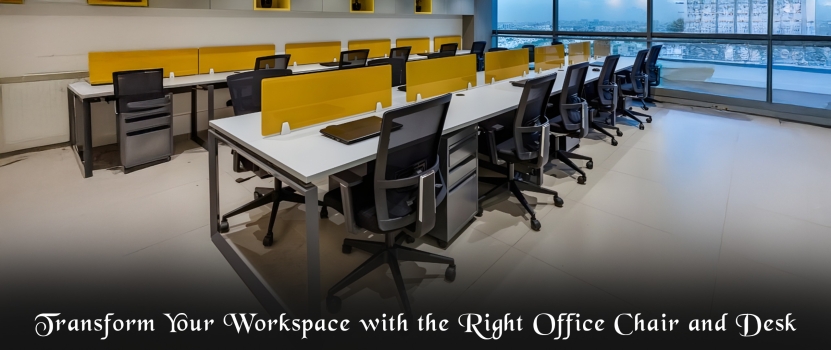
transform your workspace with the right office chair and desk
Transform Your Workspace with the Right Office Chair and Desk
You sit down to start your day - and immediately your chair reminds you it’s not on your side. Your back aches, your posture collapses, and energy slips away. The right office chair and desk change all that, turning struggle into flow.
When Average Furniture Hurts Your Productivity
The cost of a poor setup isn't just the price tag; it’s the tax on your health. When you sit in a chair with zero support, your body works overtime just to keep you upright. This uses up "background energy" that should be going toward creative problem-solving. By choosing high-quality office chairs and desks, you effectively reclaim that energy. Imagine finishing your workday feeling refreshed rather than physically depleted.
How to Pick a Chair That Supports You
If the desk is your stage, the chair is the lead performer. You wouldn’t run a marathon in flip-flops, so why run a career in a chair that treats your spine like an afterthought?
1. The Anatomy of Support
Your spine is naturally S-curved. Cheap seating forces it into a C-shape, which slows oxygen flow to your brain. When shopping for office chairs and desks, look for a "dynamic" backrest. This is a chair that moves with you, hugging your spine whether you are leaning in to work or reclining to take a phone call.
2. The Armrest Secret
Did you know your arms represent about 10% of your body weight? If they aren't supported, your shoulders and neck carry that weight all day. This is where "tech neck" comes from. Your transformation requires armrests that are adjustable in height, allowing your elbows to rest at a comfortable 90-degree angle, keeping the tension away from your upper back.
Choosing a Desk That Works With You
The desk is the heart of your production. However, a desk shouldn't just be a static slab of wood. The most significant trend in modern office chairs and desks is the move toward height-adjustable surfaces. Movement is the enemy of fatigue. By switching from sitting to standing for twenty minutes every hour, you boost your heart rate and keep your metabolism engaged. A "sit-stand" desk allows your workspace to breathe alongside your energy levels throughout the day.
Depth and "Reach Zones"
A common mistake is choosing a desk that is too shallow. You need enough depth so your monitor is at least an arm's length away to prevent eye strain. Your desk should have enough "real estate" to categorize your work into zones: a "hot zone" for your keyboard and a "reference zone" for your notebooks or secondary devices.
How Proper Setup Boosts Focus and Energy
The true "transformation" occurs in the synergy between your office chairs and desks. When your chair height is perfectly calibrated to your desk, your wrists remain neutral. Your gaze hits the top third of your monitor naturally. This is "ergonomic flow." When your body is no longer sending "pain signals" to your brain, you enter a state of deep work much faster. You’ll find that the hours slip by not because you’re struggling, but because you’re actually enjoying the process of creation.
Comfort That Boosts Productivity
Many people hesitate at the price of premium office chairs and desks. But if a setup lasts ten years, the cost per day is less than a cup of coffee. In exchange, you get a decade of better posture and higher productivity. It is one of the few investments where the dividends are paid directly into your health and your professional bank account.
Take Action: Upgrade Your Workspace Today
Don't wait for a "twinge" in your back to become a chronic injury before you act. Your work is too important to be spent in a workspace that drains you. When you prioritize the right office chairs and desks, you aren't just buying furniture. You are committing to a better version of your professional life. Your future self-the one without the back pain-will thank you for making the change today.
Frequently Asked Questions (FAQs)
1. Why should I invest in a high-quality office chair and desk?
High-quality office chairs and desks improve posture, reduce strain on your back and neck, and boost productivity by creating a comfortable, supportive workspace.
2. How do I know if an office chair provides proper support?
Look for a chair with adjustable lumbar support, a dynamic backrest that moves with you, and adjustable armrests so your elbows can rest comfortably at 90 degrees.
3. What is an ergonomic desk, and why is it important?
An ergonomic desk supports healthy posture, reduces fatigue, and often features height-adjustable surfaces to let you alternate between sitting and standing, improving circulation and focus.
4. How deep should my desk be for a comfortable setup?
Your desk should allow your monitor to sit at least an arm’s length away and provide enough space for different work zones-like a “hot zone” for your keyboard and a “reference zone” for notes or secondary devices.
5. What is “ergonomic flow,” and how do I achieve it?
Ergonomic flow happens when your chair and desk are perfectly aligned, wrists are neutral, and your gaze naturally hits the top third of your monitor. It reduces pain signals and helps you focus deeply.
6. How long can a premium office chair and desk last?
A good-quality setup can last 51-0 years or more with proper care, making it a smart long-term investment in comfort, productivity, and health.


